Kristin Allender (00:05.486)
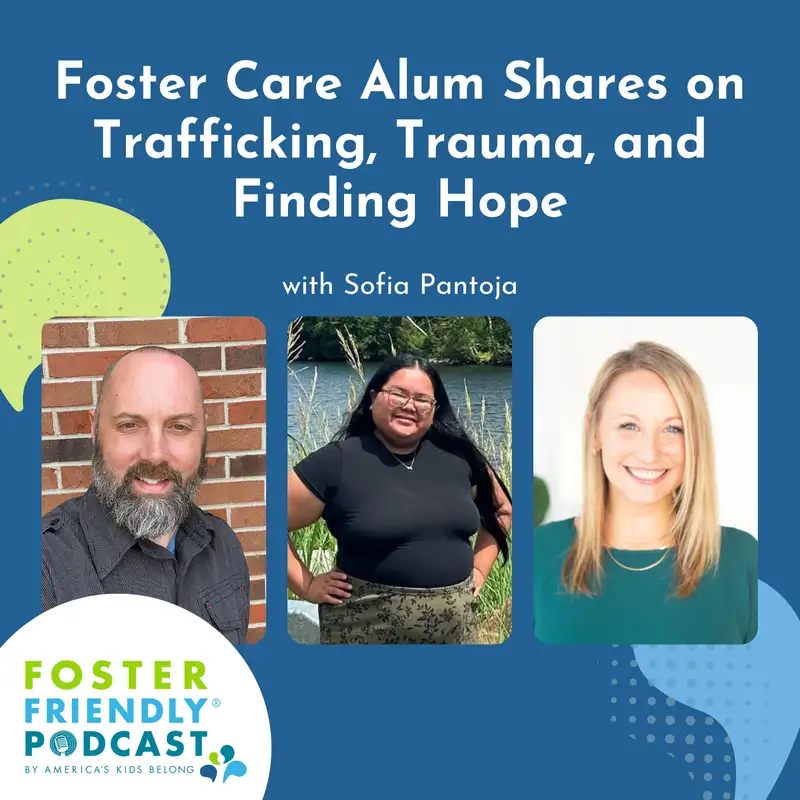
Alright, welcome to the Foster Friendly Podcast. I'm Kristen Allender, joined by my co-host, Travis Wong's Ness. Today we're continuing our Aging Out series and interviewing Sophia Pantoja. Sophia spent 11 years in foster care and aged out at 21. She is currently working on her associate's degree in social work and is passionate about being an advocate and a voice for former foster youth.
She has a lot of insights to help foster parents. So welcome, Sophia, the foster friendly podcast.
Kristin Allender (00:42.018)
All right, we typically kick off with a fun icebreaker. So as summer winds down and we are recording this, are there any summer vacations or favorite trips of all time that you guys have?
Travis (00:56.678)
Sophia, kick it off.
Sofia Pantoja (00:58.687)
Yeah. So this summer, I went to Lake George with my family. it was very fun. I think just being in the setting of like being around like a lot of water. But it's just like something I'm not used to, like living in the city. so it was definitely like a nice change of environment, like quietness, you know, good food.
Kristin Allender (01:06.04)
Okay.
Travis (01:15.014)
Mm-hmm.
Kristin Allender (01:26.122)
Yeah. Sophia is joining us from Manhattan, lives in New York.
Travis (01:27.716)
love it. Yeah.
Kristin Allender (01:33.848)
Travis, what about you?
Travis (01:33.988)
That's a great one. That's a great one. Yeah. No, I I'm vibing with that. Quiet water, good food. I'm gonna go with back to shortly after I got married, pro pre kids. We went on a four corners trip out west to Moab, Utah, Durango, Colorado, that whole area, Arizona, and like no kids, so we were much more free. I got to do some rad mountain biking. Like you said, great food, just hanging out, just with family. So cool.
So fun. But you, Kristen, you're a world traveller.
Kristin Allender (02:05.441)
That is awesome. I recently was able to go to Portugal with my husband and my two girls. And I think the mix of city and then beach and lots of good food and everyone just doing community out in the open was so cool. I loved it. That was my favorite trip. Every time I go on a trip though, I say that's my favorite one. So we'll see where where it is next.
Sofia Pantoja (02:29.77)
Yeah.
Travis (02:31.995)
That's hilarious. I'm kind of that too. All right. Well, let's just kind of move right into this thing. And yeah, really grateful to have you on, Sophia, and just sharing more of your story and and kind of the things that you've experienced and been through and the insights you've gained. So I know it's a big ass to kind of go through your story, but if if you can just kind of walk us through some of the key moments being in foster care, yeah, love to have you get started on that.
Sofia Pantoja (02:56.734)
Yeah. so I entered care when I was ten years old. you know, due to my parents' drug addiction. you know, there were like a lot of abuse happening in the household. so yeah, I've lived with a relative, went into a foster home and then my last placement,
was a residential treatment center up in Westchester.
I don't know. I I feel like if, you know, if people who knew me back then, like they would totally say I'm like a different person now. you know, obviously like when you're younger and you go through a lot of like traumatic experiences, you kind of tend to respond, you know, like a rebellious teenager. Especially like being in a setting where I guess I wasn't really allowed to do anything.
you know, I was in a very strict foster home where I wasn't allowed to like hang out with friends. you know, and yeah. So I'm here now.
Travis (04:20.079)
So so remind me, how many different homes did you say in that span? You know, 'cause when you talk about one foster home or th at least or one that you spent a lot of time in.
Sofia Pantoja (04:30.334)
Yeah, so I was in one long term foster home. after I at right when I turned 16 years old, I think that's when I started becoming a lot more like rogue and I was doing a lot of things that I definitely wasn't supposed to be doing at that age. so yeah, it got to a point where my foster parents, they kind of like couldn't handle
Travis (04:49.435)
Sure.
Sofia Pantoja (04:56.954)
Stuff that I was doing anymore. So they kind of decided to take me out of the home. and I was between placements for a month before they put me in the group home. so I was in like a 21-day program in another agency for kids with behavioral issues, and it was very locked down, like all the doors are locked.
Travis (04:59.715)
Mm.
Sofia Pantoja (05:24.616)
you know, like it's a very strict routine, like you can only watch the only fun thing you could do is like watch movies for like an hour. And then you have like school for the day. we have time where we can go to like the recreation center and play some games. But yeah, it's very strict. Twenty-one days I did that. They discharged me the first time. And then I believe they were still in the process of getting me
enrolled in the group home. So basically literally like a week after I went back a second time. yeah. And so obviously now I know it's because there was no homes that were willing to take me. I was in a respite home literally for like five days, didn't end up working out. yeah so that's why they have put me back in the 21day program. And then when I left the program that second time is when they brought me to
Travis (05:56.347)
Mm-hmm.
Travis (06:01.285)
Okay.
Travis (06:09.251)
Mm.
Travis (06:25.519)
Okay.
Kristin Allender (06:26.967)
Sophia, what do you what do you wish those foster parents would have known about why those behaviors were happening? What do you think might have changed that relationship or your ability to stay in that home?
Sofia Pantoja (06:40.894)
I think for me I was very misunderstood. Like I feel like at no point in my life was I like a bad kid. you know, I think I was kind of going with what I knew. you know, like obviously growing up even in the Philippines, it was very unstable. I wasn't living with my father. My mom was here in the United States trying to make a living. So
I was back home with relatives and I would kind of just like move from house to house like every year, every two years. I was living with a new relative. and so, you know, I think my whole life I never was in a stable household. until that foster home when I and I was with them for six years.
Travis (07:19.747)
Mm.
Travis (07:27.611)
Hm.
Sofia Pantoja (07:36.454)
So yeah.
Travis (07:38.287)
Yeah. Well that and you had a cultural gap too to, you know, coming from the Philippines to the US and then navigate all that and then like I mean, there's a lot of probably felt I wonder if it felt a lot of times like kind of where am I, or just not really feeling at home it in life.
Sofia Pantoja (07:56.384)
Yeah, definitely. Like even coming here, I didn't know English. so and I also skipped the grade. So when I left the Philippines, I was in second grade. I came here, they admitted me into the third grade. and obviously like the educational systems is very different here from there. you know, but thankfully I had like a classmate who spoke the same language as me. So yeah, it was cool. He was
Kristin Allender (08:09.589)
Mm.
Sofia Pantoja (08:25.385)
You know, so he was kinda like my translator for a few months while they put me in ESL classes. and I took ESL for maybe about two years and then I was fine with English then.
Kristin Allender (08:39.617)
That's a lot. English is a hard language to learn.
Travis (08:39.707)
Mm-hmm.
Sofia Pantoja (08:41.929)
Yeah, it it was.
Travis (08:43.611)
Well, how would you talk a little about like the th you know, you've kind of reflected a little bit already of just, you know, looking back what you were maybe the ways in which you were coping, you know, and felt trapped or what looked rebellious was a lot of times it's as a teenager you're just trying to figure out life and you're upset or you're scared and doing things just to
kind of get away from all that inside. I mean, looking back, you know, what were some of the things that you felt like really most shaped you in foster care then and now as an a young adult? Like how how did, if that makes sense, like, yeah.
Sofia Pantoja (09:32.256)
Yeah, so even when I first came here, I had a little brother that I met for the first time. it was very different. but you know, like even then while my parents were going through what they were going through, I kind of was like left alone to kind of look after him. So I basically had to grow up really fast. and so I definitely think that's like the biggest thing that kind of like shaped me to
Travis (09:53.179)
Mm.
Sofia Pantoja (09:59.68)
why I am the way I am now. Like I'm 24 years old, you know, but like I'm friends with a lot of older people. you know, and I think it's just because like the mindset that I have now, like other twenty four year olds, you know, they're like out, you know they're out like, you know, like trying to figure out adulthood for the first time. And then, you know, me going through a lot of things when I was a teenager.
Kristin Allender (10:05.824)
Mm-hmm.
Travis (10:06.971)
Yeah.
Kristin Allender (10:19.681)
Mm-hmm.
Sofia Pantoja (10:27.945)
You know, I think definitely like mature my maturity level. It has been there since I was a teenager. you know, but like I guess the silver lining is it kind of like prepared me better for you know for like independence and kind of what like what I have to do for myself because I know there's nobody else that's like really gonna help me.
Travis (10:54.395)
Mm-hmm.
Sofia Pantoja (10:54.813)
so yeah, definitely that independence and like maturity that I have now.
Travis (11:01.541)
That makes a lot of sense. Yeah.
Kristin Allender (11:05.271)
When you look back on that teenage version of yourself, like is there a message you would want to share with her?
Sofia Pantoja (11:15.943)
yeah, I mean, I don't know. I feel like it was a lot of things, but definitely that I wasn't alone. I guess when I was, you know, younger, I kind of felt like I was alone a lot and like nobody really understood where I was coming from. you know, being in a home with like
eight other foster kids. Like it was literally a foster home full of kids. yeah, and like my foster mom, she was very nurturing. and I don't know what else. My teenage self. Hmm. I don't know, honestly. It's kind of hard because I kind of like think back on like the stuff that I used to go through. And I kind of felt like I really was just like
Travis (11:59.938)
Yeah. Sometimes it's
Sofia Pantoja (12:11.935)
I was going into them head on. Like I'm a very was an impulsive person. So, you know, a lot of the times I don't really think through what I do and I just do what I feel like is right in the moment. you know, so I feel like then like you learn a lot of like valuable lessons. so yeah.
Kristin Allender (12:15.022)
Mm.
Travis (12:20.302)
Mm-hmm.
Kristin Allender (12:25.097)
Mm-hmm.
Travis (12:29.477)
Sure.
Travis (12:39.297)
No, that makes a lot of sense. And I mean, some people I think really I don't know, I don't I'm kinda like what you said of when I think back, like what would I have told myself in certain moments or situations and there's a lot of where I reflect, I think I would have done the same thing. You know, it's like this is how I'm wired. You know, maybe I if I took the wisdom I had now or a little more wisdom, you know, would I do things a little differently? But but i I think that's a really w honest answer you said about just like you just always face things head on. So
Kristin Allender (12:53.602)
Mm-hmm. Yeah.
Kristin Allender (13:00.046)
Mm-hmm.
Kristin Allender (13:05.976)
Yeah.
Sofia Pantoja (13:08.48)
Yeah.
Kristin Allender (13:11.54)
Sophia, my my background actually is in child abuse investigations and I spent quite a bit of time working with kids who were specifically victims of sex trafficking and a lot of them came from the child welfare system. And if we look at statistics, I think we've seen anywhere between sixty to seventy percent of victims of sex trafficking have had a history with the child welfare system. And the direct
correlation with kids who ran away from foster homes or group homes. It's about one in five of those youth who have run away become trafficking victims. I I know this is a a very sobering issue. it's a hard one to talk about. And one of the things we want our listeners to do is to be aware. and so I know you you have some experience with this and we're we'd be honored if you'd share.
some of your story connected to this.
Sofia Pantoja (14:09.068)
yeah, so I would say mine was short term. It o it happened over a summer. unfortunately I was a part of the statistics why it happened is because I ran away from the group home that I was in. Because at the time in my mind, I was like, Well, being anywhere else is better than being stuck here. you know, and I feel like a lot of the times, I mean like back then too.
My mom, she was very in support of me staying in the group home. So I knew that if I ran away, I couldn't go to my mom for help. Yeah. And she would just bring me back to the group home. So I knew that I couldn't go to her. So at the time I had a best friend who I was very close with. I got very close with in the group home. you know, and she kind of just brought up this idea to me one night, like, hey, like, you know, let's go in let's go to Brooklyn and
Travis (14:45.787)
Yeah, yeah.
Sofia Pantoja (15:05.394)
stay with my stepdad until we kind of figure out what to do from there. So that's what we did. went to her stepdad in Brooklyn. and you know, I feel like as soon as we got there, it was very weird and creepy. Like her dad was very like predatory from the moment that he met me. And so I would guess I guess like the trafficking situation
Travis (15:27.867)
Hm.
Sofia Pantoja (15:34.089)
It kind of just like flowed if that makes sense. Like he didn't tell me s he didn't tell me straight up like, hey, I'm gonna, you know, sell you to these guys and you have to s have sex with them or whatever. and, you know, I think when I was younger I was very naive and I was very easily manipulated, especially with my situation at the time, feeling like, okay, well, I kind of just have to accept what people offer me because
You know, the things that I really want, I I really can't do it or I can't get it because of my circumstances. yeah, so it really started off with her dad being very creepy towards me. And, you know, in my head, it was already creepy to me because he's like in his mid forties. So in my mind, I was like, What what in your mind is like, why are you attracted to a sixteen year old girl? Right. So, you know, even along with this
Travis (16:28.379)
Mm-hmm.
Sofia Pantoja (16:32.074)
the the trafficking. There were a few times where I woke up being I was woken up by being like touched and stuff being done to me. you know, like I think for me it was weird because at the end of the day it was still sex, right? So it was very conflicting for me because I was like, like I know this is wrong but like it felt good at the time.
Travis (16:41.05)
Uh-huh.
Sofia Pantoja (16:59.488)
And then it kind of just flowed. He introduced me to a guy. And that guy was like a regular person that came a lot. you know, so when I would get the money, he kind of told me to just give it to him. So basically the money that I was getting, it wasn't even for me, it was for him. You know, like and there were times where me and my friend, we kind of figure out, like, hey, like, what are we gonna eat? Because he's taking the money.
That I make and like if I want something I would kind of have to ask him for it, which was you know, I was like, it is what it is, like I guess I have to do what I have to do. And so that went on for a month and a half, almost two months. you know, the situation finally came to an end when something happened to my best friend. He did something to her as well, and so that led to the cops being called.
Travis (17:45.467)
Mm.
Sofia Pantoja (17:58.497)
Which is how he got caught. And it's actually like such it's actually so crazy because the night that he got caught, I was with a guy that he had sent me with. I spent the night over at the guy's house. And I came back to the apartment the next day. And literally was in the hallway knocking on the door, I swear, like for like three or four hours, right? And nobody was answering.
Travis (18:25.52)
Mm-hmm.
Sofia Pantoja (18:26.698)
And at the time, I didn't have a cell phone to call anybody in. I had like an iPad and it was inside the apartment, so I couldn't, I didn't have anything to contact anyone until, you know, a neighbor saw me being out there. And, you know, she had told me that, hey, like the police were here yesterday and they took the people that were living there. And so I called my best friend from her phone. They took my best friend back to the agency with the
Travis (18:49.701)
Mm.
Sofia Pantoja (18:56.566)
home, you know, that's when she kinda told me everything that went down. He got arrested. You know, it's finally over and yeah, so that that's how it happened.
Travis (19:05.987)
Yeah. Wow. Well
Kristin Allender (19:07.694)
Wow. Well, thank you for sharing all that. you know, and and we hear these statistics sometimes and when you hear when you meet somebody and you you hear the story behind the statistic, it just makes it all the more real, right? There's a a guy named Johnston Moore who is an advocate in this space. He's an adoptive dad and he has a really provocative line that he sometimes says to churches and he's like, Don't let the local pimps
in your neighborhood be more aware of the vulnerable kids in foster care than the churches. and it's you know, it's like, that's a that's a little intense. And also when you work in this space and you know the the stories behind the stats, it it's pretty powerful.
Travis (19:54.758)
Yeah, wow. Well, my first of all, thank you for the honesty and vulnerability to share that. that takes courage, but also listening, you know, to it can't help li but listen and feel very uncomfortable in that, but you weren't pulling punches above that was your experience. Like it it is that bad. And what I was really struck by in listening to your story too was the way in which how is how trafficking can so easily be
be at least like you just explained like the start into that world wasn't just like you got kidnapped for the Walmart. Like the it it was this natural like relational progression into this connection and then this guy through that and then you're super vulnerable because you're looking for belonging and escaping the group home. I mean you really in your story lay out how clear, how how easy this does happen. And now here you are in that.
Kristin Allender (20:32.13)
Mm.
Kristin Allender (20:49.282)
Mm-hmm. Yeah.
Travis (20:53.123)
And getting abused and it's horrible.
Kristin Allender (20:56.227)
Mm.
Travis (20:56.581)
So yeah, just what curious if if we continue on together, the three of us a little bit in this camping out here in this is Sophie, if you what do you have any kind of based from your own experience in looking at that? But if there's foster parents listening that, you know, couldn't not just teenage girls, I mean boys as well, but
you know, things that they could possibly be be looking for, be aware of in the youth that they're serving or caring for, like as signs of something or I mean, do you have any like insights for foster parents listening to this about that?
Sofia Pantoja (21:35.265)
Well, I think with foster parents, first of all, you kind of have to let your foster child be aware that anything can happen at any given time. Like, you know, like similar to my situation, like I thought I was in a safe space and then, you know, 'cause this person had put up a facade and so the facade quickly obviously went down when the situation went down, but
I just feel like you have to make sure that your foster child knows that they can kind of come to you if anything comes up because like it seems very simple, but you know, especially like teenage foster ch child where a lot of the times we kind of don't want to speak about like what we went through and you know, but like deep down we know there really hasn't been anyone that cares, cared about us.
Travis (22:33.295)
Hmm.
Sofia Pantoja (22:34.59)
And so, you know, and like even now, like just being honest, like a lot of foster homes obviously are not, you know, safe spaces. like, you know, you have foster parents who kind of just kind of just do it for the money, which is very unfortunate, but it's very true in this world. and I kind of feel like you can't really control that, but
Travis (22:55.931)
Mm-hmm.
Sofia Pantoja (23:04.768)
You know, like if you know you're in a home where your foster parents care about you and they wanna be there for you, I think it's very important to have that relationship where, you know, you can be open with each other and honest and just kind of give them that safe space to be like, Hey, you know, you can come to me if, you know, if you're going through anything. because we kinda we kind of tend to hide a lot, especially like teenagers.
Travis (23:31.429)
Hm.
Sofia Pantoja (23:34.004)
kind of don't really like people in our business and you know like from my story like I said before things can really just happen in a second like in all kinds of situations. so yeah that's honestly I would say.
Kristin Allender (23:36.686)
Mm-hmm.
Travis (23:43.098)
Yeah.
Travis (23:49.615)
Yeah.
That's gold advice. That is really good. Really good. I when I was reflecting on this, I mean, you hit everything I was even th and and more because you live that. I I can't help but think too, as a foster parent, really trying to work on helping the kids they care for see the the cell the worth in themselves. And and I wonder if, you know, even just developing
Kristin Allender (23:53.72)
Amazing.
Travis (24:19.173)
hobbies and really they're get you know, things where you're not looking for that external validation to where you're like just constantly searching for that. And then that that's really easy to get trapped up in that. But yeah, I just not that it's an easy answer, but I I I I would I think that's another piece too as well is, you know, just really looking for ways that they can find worth in really positive things. Yeah.
Kristin Allender (24:43.993)
That's good, Travis. That reminds me, I heard a foster parent say recently that they enrolled their teen son in a baseball program that said, Hey, bring, you know, anybody in foster care can come sign up for free. And she said he started finding his value and his worth as a teammate, as a good, you know, pitcher or whatever position he played, and not his identity through being in foster care. It w it was he was finding his identity in something else, finally. So yeah, reminds me of that.
Travis (25:08.293)
So good.
Travis (25:12.035)
That's so good. That's exactly it. Well, what I appreciate so far in this conversation is yeah, it sounds like you know, you're working on, you know, we're gonna hear more about this at the end, but you know, what you're planning to do with social work. But yeah, I I can hear the that in you, that the gift of maybe what you're gonna do with your vocation because of how much you know your heart's connected to your experience. as you you know, you've already talked some about this to foster parents' insights. What are some other, you know, any other
Kristin Allender (25:18.351)
Mm.
Kristin Allender (25:24.591)
Mm-hmm.
Travis (25:39.739)
advice that you you could share with foster parents just from your time as kid in care.
Sofia Pantoja (25:45.473)
Yeah. so I feel like I had already mentioned this, but I was in a very strict household. And, you know, it could be due to like obviously like the culture of your parents. But I would say like it's okay to give your foster kid like a little bit of freedom to live a normal life. You know what I mean? Like for me it was very confusing when my friends all they literally had to do was let their parents know, hey, I'm gonna be here.
you know, you have my location, you know where I'm gonna be at, you know, or or even simple things like, you know, you can speak to my friends' parents, you know, to know that we're not lying and stuff like that. But I think definitely just like a little bit of freedom. Like obviously being in care, like we already know we're not the same as other kids. you know, especially if it's not like a big city or anything. Like my foster home was in Long Island. So it was very like suburban.
Kristin Allender (26:32.302)
Mm.
Sofia Pantoja (26:42.73)
I went to a school that literally had like 300 kids. you know, and like you see everyone, like my high school was very cliche. Like we had homecoming, football games, a lot of things that a lot of teenagers, you know, kinda wish they had, like it doesn't happen here in the city. but you know, that's what I wanted to do. Like I joined sports teams, I was able to build friendships that way.
You know, and I think it was nice for once, not kind of having to explain like my background because that's not what teenagers talk about. We talk about, hey, you know, like which boy do you have a crush on? Like do you wanna go to the movies? You know, fun stuff like that. and not to definitely not putting the blame on them, but I definitely feel like my rebellious personality just came from being held back a lot.
Kristin Allender (27:25.327)
Totally. Hmm.
Travis (27:25.851)
Ha ha ha.
Travis (27:41.071)
Mm-hmm.
Sofia Pantoja (27:41.95)
I would say my routine there was very structured. It was like go to school. You know, if you have sports practice, go there. But then you have to come home e immediately after.
Yeah, so I I I definitely think that's like the biggest thing that I took away from that is like it's okay, you know, to give them a little bit of fun because it makes them feel like they belong and they're normal, you know, like they can do fun things with their friends. And also I think it's a sign of like you trust them. That's definitely a big thing. You know what I mean? and I think my foster parents, I think they definitely were just being cautious because
Travis (28:15.797)
Mm. Yeah. Mm-hmm.
Sofia Pantoja (28:24.864)
they knew that I had a history of running away. So if I mean like honestly like their concern was very fair, but I also just didn't like the fact that they kinda like just put me in a box. Like that they they always have that in in their head, like, like, you know, if we take her eyes off her, like she's just gonna run away and she does whatever she wants. But
Travis (28:36.283)
Mm-hmm.
Sofia Pantoja (28:47.072)
You know, I think being in that home I experienced a lot of first like the in that home, that was the very first time that I had my own bedroom. I had my own space, privacy.
Kristin Allender (28:55.671)
Mm.
Kristin Allender (28:59.097)
What did that feel like for you?
Sofia Pantoja (29:01.748)
I I think I was just I think I was just so excited. you know, it was like a big room. Like I was again, it made me feel normal. Like I put up like one direction posters, you know, stuff like that. Like and I think it just gave me room to kind of just like think on my own and kind of like that creativity, and like a sense of freedom like that. You know what I mean?
Kristin Allender (29:05.337)
Mm.
Kristin Allender (29:16.085)
Okay, okay. Mm-hmm.
Kristin Allender (29:32.035)
So good. That's so good. I have a lot of follow up questions, but one is they don't do homecoming in the city? I'm so confused. Really?
Travis (29:32.195)
Yeah. It's I l I love it. Great advice.
Sofia Pantoja (29:42.841)
no. So like schools in the city, like obviously like the build like you don't have much space. So even like in Manhattan, you know, like some you'll find school in Queens that have like football fields, but like generally in Manhattan where I live, it's very it's just city, just urban. You don't have space for a football, you literally just have space for the school. That's it, like you know, so
Kristin Allender (29:51.876)
Right.
Travis (30:03.13)
Yeah.
Kristin Allender (30:03.564)
Okay.
Travis (30:06.501)
Yeah.
Kristin Allender (30:07.231)
true. Okay. Wow.
Didn't didn't ever think about that. Learned that today. all right. So Sophia, you are taking all of this experience and you are pouring that into currently getting a social work degree. Can you tell us about that and maybe direction you're hoping for with that?
Travis (30:13.487)
Learn new.
Sofia Pantoja (30:32.638)
Yeah, so actually originally I did it I wanted to do nursing. family expectations, that's all. But I feel like deep down in my heart that I knew I didn't really want to do nursing, but I kind of had just accepted it for the time being because I was like I do know that I want to help people, you know. So if it's through being a nurse and, you know, keeping in mind like you get paid great as a nurse,
Kristin Allender (30:41.699)
Mm-hmm.
Travis (30:42.272)
Ha ha
Sofia Pantoja (31:03.712)
Yeah, and then I basically started doing internships with like Administration of Children's Services, which is like the citywide agency that handles foster care here. and I think through working in there and I was able to work in different departments. I think it really it really I think it really kind of op I think that was the very first time in my life.
where I was able to be in a room with a lot of kids where I share a lot of a lot of experiences with them. You know, because one of the eligibility for that internship was you had to be in foster care or be a foster alumni to be eligible. So you know, we would have a lot of like team meetings and we had moments where we could share our story and I think
we kind of just started pointing to each other like, hey, like I went through that same thing and I felt the exact same way, like you in this situation. you know, and I think that's when it really started clicking into my brain that like, wow, having that visibility like in the room, you know, like you don't want to be the odd one out, obviously. So going from a place where, you know, people are like, Whoa, like you're in foster care, you know, like are you adopted? Things like that.
Kristin Allender (32:03.503)
Mm.
Travis (32:19.363)
Mm.
Sofia Pantoja (32:28.128)
to be in a space where where, you know, like everyone had the same situations. you know, obviously we all went through our own things. And I think it was even fun to kind of hear other people's perspectives. you know, 'cause there were kids who had never been in a foster home. There were some who had just been in group homes their whole lives. So just being able to speak to
Kristin Allender (32:33.423)
Yeah.
Kristin Allender (32:44.332)
Uh-huh.
Sofia Pantoja (32:57.854)
each other about that, I think for me it was very inspiring. And I think that's when I officially made up my mind, like, okay, like I want to work in the foster care field. you know, and s having like private conversations with my supervisors and kind of telling them like, you know, I basically want to sit in the the same spot that you're in, you know, now, hopefully like in the future. I think for me it's really just all about
helping and just making sure that like the system is fair to all. because yeah, that's something that's not really like big here, you know, like kids will age out of the system not knowing the resources that they had. 'cause in New York City, being a foster kid, you get a lot of benefits. You know what I mean? Like education, housing.
Kristin Allender (33:34.383)
Mm.
Travis (33:47.024)
Yeah.
Sofia Pantoja (33:56.331)
you know, even like employment. you know, and I think I kind of was thinking back to, you know, when I was like ten years old and going into care for the very first time and figuring out a lot of things by myself. and, you know, I the again like this the ability that I didn't have, I wanted to be someone who was in a kid's life.
And they know that I'm not gonna leave. 'cause, you know, in the field of social work, obviously like the salary isn't really that great here. so you know, like a lot of the times you will meet a social worker, you know, you kind of start to open up to them and then two weeks later they're like, Hey, I have to leave because I have found a better job opportunity. you know, and even in my own experience, like
Travis (34:27.855)
Yeah.
Kristin Allender (34:33.57)
Mm-hmm.
Sofia Pantoja (34:53.556)
Meeting social workers,
That is like you kind of can tell from their demeanor that like they kind of obviously do it for the money. and but like being in a human services field, like you have to have like compassion, you know, simple things like that. It seems simple, but a lot of people really don't possess that quality unfortunately. yeah.
Kristin Allender (35:19.363)
Just just like every field, there's people that are, you know, rock stars and there's some that maybe maybe aren't. That's Yeah. Yeah. Yes. You're burned out. Yeah. Well it's very exciting that you're you're going down the path of social work. I I hear that often, the the correlation between nursing and and social work and it's really just that helping heart. I never considered nursing. I
Travis (35:21.168)
Yeah.
Travis (35:25.113)
Or you get jaded. You know, that's that's a big part of it, is like you did have that compassion and then ten years later it's you're jaded. Mm-hmm.
Sofia Pantoja (35:33.322)
Yeah, so mm hmm.
Kristin Allender (35:49.616)
Can't even can't even look at a needle or a blood. I couldn't do that. but social work's amazing. There's so many different avenues you could you could serve in in foster care in that space. very excited for you and for what's to come for you with that.
Kristin Allender (36:10.192)
I had I had something else that reminded me of and it has escaped my mind.
Travis (36:18.011)
All right, we're taking a breather before we get to the finish line.
Kristin Allender (36:21.154)
I know, I had i something you said about that, Sophia, I was gonna ask. Hmm. We'll edit this out, I guess. Sorry.
Travis (36:25.945)
I had something too earlier in the escape. That's all right. It's all good. I get a stretch.
Sofia Pantoja (36:31.872)
Yeah.
Kristin Allender (36:32.24)
What were you talking about? You're talking about hm. I don't know. All right. Back on.
Kristin Allender (36:45.25)
Okay, Sofia, how would you finish this sentence? What kids in foster care really need is
Sofia Pantoja (36:58.622)
Literally love and stability. I I honestly feel like that should be the foundation. especially love. and just the feeling that, you know, like somebody really cares about my well being and, you know, they kinda want me to grow up to be the best version of myself.
Sofia Pantoja (37:21.312)
Yeah, and obviously stability. you know, once a foster kid comes to your home, they're obviously, you know, in their mind is like, you know, like, well, like how long am I gonna stay in this home? You know what I mean? Or am I gonna end up being adopted? Like it's so many things that goes through a kid's heads, but yeah, like I've been saying this whole podcast, definitely stability number one.
Travis (37:48.475)
Yeah.
Kristin Allender (37:50.874)
Let me let me ask you something else. You've used the word foster alumni, former foster youth and foster kid. Everyone we talk to has different thoughts on what they prefer. What what do you prefer? People call someone who spent time in foster care?
Sofia Pantoja (38:05.996)
Sofia Pantoja (38:11.316)
I don't know. I kinda refer to us a lot like foster alumni, you know, like aged out youth. yeah.
Travis (38:23.589)
That's a great question. I like the alumni one, but that's who am I to say? that's really good. And I love to, you know, love and stability. I think that's what I think that is what foster care when it shines can really be. And I think that that's when foster families, this is one of the really big things America's kids belong, is supporting helping to support foster families and
Kristin Allender (38:23.642)
Good to know.
Mm.
Kristin Allender (38:30.67)
Mm-hmm.
Travis (38:53.573)
provide awareness for the the and the on ramps and I think supported foster families become stable foster families that then can really flourish and be loving places that healing can happen. And I I really loved what you said earlier on about too like when you're in in a home to feel trusted is to feel like you belong. I mean you you you've had some great lines in this thing. So way to go on that. So I did you have any closing words, Sophia
Kristin Allender (39:15.418)
Mm.
Sofia Pantoja (39:25.324)
yeah, I mean I kinda I mean I would just say honestly just keep going. Like there are there are a lot of times where you kind of feel like you're at the lowest in your life, but like honestly, there's always a light at the end of the tunnel. and it's also like yourself. It's like you have to want the best for yourself, you know, you have people telling you.
like you're not you can't go to college, like all you know, the statistics that foster a lot of foster kids don't even get to graduate college because of, you know, depending on the path that you go down on, but yeah, I would definitely say like foster care very much has its negatives and positives, but it's defin the positives definitely outweigh
the negatives and you know, like at some point in your life, like you're gonna look back on it on in your experience and like, you know, you're gonna go through a lot of things that you don't want to, but it's kinda like it's shaped you into the person that you are now. And you know, it's like I wouldn't be the same with without the experiences that I had and the lessons that I learned.
Kristin Allender (40:46.596)
Yeah. Well you are very wise and you had to grow up too soon. But I'm I'm excited for you in the way that you'll be able to pour into and be that consistent safe person for kids in foster care that will need you.
Travis (40:52.475)
Yeah.
Travis (41:02.627)
Yeah. Yeah. And and you had a message too for other foster alums right there too. That was keep going and yeah, I love that. So well as we close this out, thank for again, thank you for being on and sharing your insights and wisdom and and yeah, we're cheering you on for where you're gonna go from here. But we just wanted to end the episode with talking more about the I Belong project, from America's Kids Belong. It's one of our flagship programs that really features kids who are eligible for adoption, one in four kids in foster care.
are not eligible to be reunified for all the different reasons around the court and their plan with, you know, their their home family. So and that is where adoption then from foster care does come in and is vitally important and is also vitally connected to prevention then or at least can help mitigate some of the effects of trafficking with kids that are just aging out to nobody. So yeah, Kristen, if you want to tell us more about the I Belong project.
Kristin Allender (42:01.358)
Yeah, currently in seven of our states we are filming those kids. And those are dignity-driven, trauma-informed days that are fun and amazing for the kids. They have a choice always to take part and they know what the video is video is being used for, which then we hold intention, right? We know why they're coming, they know why they're coming, and how difficult is it to be on film. but these these videos wind up capturing their quirks and their personalities and their
singing sometimes and jokes and all the things. and those are used then to help them find prospective, you know, adoptive families. And they are wildly successful. we hear over and over again from families who said, you know, I was just scrolling on social media and happened to see a video that was posted and felt like that was supposed to be my son or daughter and that we could be a safe place for them. So
Travis (42:31.907)
Yeah.
Kristin Allender (42:56.622)
You can go onto our website, Travis, you can tell people more about that.
Travis (43:01.999)
Yeah, so just w and we'll we'll actually provide in the show notes a link for some of this stuff. But yeah, you go on the website and where are we at on this thing?
What what should I add to that?
Kristin Allender (43:18.106)
Sorry, just say go under the Meet the Kids tab and you can see kids and
Travis (43:22.327)
Okay, yeah, yeah. Okay. So yeah, just go on to the website. we'll also have a link in the show notes, but you can go to the tab that says meet the kids and then you'll see the different states that we have set up, you know, if you're in that state to and you can adopt across state lines as well in some instances as well. So yeah, and you'll see the waiting kids also for adoption through our IBelong project.
Kristin Allender (43:45.368)
Yes. Well thank you, Sophia, so much for joining us today. We're grateful to get to know you.
Sofia Pantoja (43:50.72)
Thank you guys for having me.
Travis (43:53.871)
Yeah.
Kristin Allender (43:55.278)
Thank you for your vulnerability with your story as well.
Travis (43:59.708)
Appreciate ya.